Journalists
- Relief Worker - Politicians -
Human Right Activist Abductions or Death
A Profile of
Arjan Erkel, Head of Mission of Médecins Sans Frontières, abducted in
Dagestan
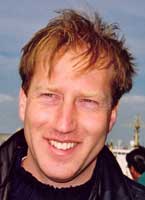
Arjan
Erkel, 32 and a Dutch national who, on August 12, 2002, was abducted by
three unidentified gunmen in Makhachkala, the capital of Dagestan.
Médecins Sans Frontières (MSF) is an international medical
humanitarian organization that provides medical and humanitarian
assistance to victims of war, conflicts and disasters. This assistance
is given without political, religious or ethnic discrimination. MSF is
independent and is mainly funded by public donations from the 18
countries where it has representative offices. In November 2000, MSF
testified before the Parliamentary Assembly of the Council of Europe as
to the grave humanitarian situation in Chechnya and denounced the
policy of terror conducted by the Russian and pro-Russian authorities.
In January 2002 MSF published the above
report on Chechnya/Ingushetia. On August 12 of the same year Arjan
"disappeared". After 18 months of cautious wordings, MSF finally
decided to openly accuse the Daghestani authorities and the Russian
secret services to be involved in the kidnapping. A month later, on
April 11, 2004, Arjan Erkel was released.
Antonio
Russo, an Italian Freelance Journalist murdered for his Reports on
Chechnya
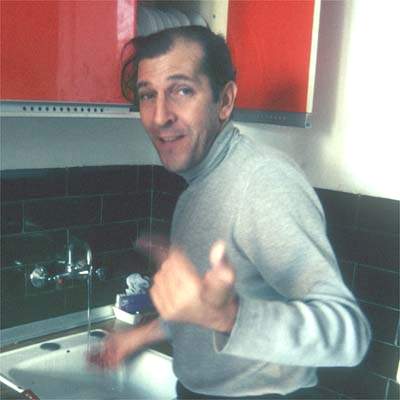
Antonio
Russo was an Italian freelance journalist documenting the use of
illegal chemical weapons in the Chechen war. He has been tortured and
killed on October 16, 2000. His body has been found 80 kilometers from
Tbilisi, the Georgian capital. After investigations suspects fall on
Russia's FSB (former KGB secret services). He was a member of the Transnational
Radical Party
which defends the Chechen cause as NGO at the UN and about that time
entered in conflict with UN's Russian representatives. Read
the story of Antonio Russo.
Some other cases of murder, abduction or ill-treatement
(chronological order - more to find in the press releases):
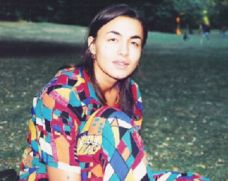
| Slovak student and
aid worker Miriam Yevikova, was kidnapped in the Northern Caucasus in
early June and has been freed on November 23 2004. Yevikova, a student
at Charles University in Prague, worked for the Prague-based
Organisation for Aid to Refugees (OPU) in the Czech Republic. In late
May, she spent a few days in the southern Russian town of Pyatigorsk;
from her hotel she phoned friends in Nazran, asking them to meet her at
the Ossetian-Ingush border. However, she did not show up there at the
appointed time. Soon after, however, OPU received a ransom request for
one million dollars, a sum this small NGO was unable to pay. Miriam
Yevikova had made several visits to the Northern Caucasus. In the Czech
Republic she was mainly concerned with the problems of Chechen refugees
and wrote articles for one of the Czech newspapers. |
|
Nikolai Girenko -- prominent human rights defender,
Professor of
Ethnology and expert on racism and discrimination in the Russian
Federation -- was shot dead on 19 June 2004 in his home in St
Petersburg. He was aged 64. According to reports, Nikolai Girenko was
approaching the front door of his apartment to answer the doorbell when
he was reportedly shot through the door with a shotgun. He was Head of the
Minority Rights Commission at the St Petersburg
Scientific Union and had conducted several studies for Moscow and St
Petersburg authorities on neo-Nazi and skinhead groups in the Russian
Federation and had repeatedly warned that such groups were on the rise.
On
16 January 2004, the dead body of the human rights
activist, Aslan Davletukayev, a volunteer for the Interregional Public
Organization "Society for Russian-Chechen Friendship", was found on
the roadside near the town of Gudermes. The body had traces of violent
death and torture. SRCF "rates the abduction and murder of Aslan
Davletukayev as another act of state terror against people of the
Chechen Republic and as another episode in the chain of physical
extermination of political and ideological opponents by the regime. It
must be noted that Aslan is already the fourth activist of the Society
murdered since 2000. And the complicity of Russian security agencies in
at least two of these four deaths is evident and in the other two seems
to be the most probable. One more volunteer for the Society, Artur
Akhmatkhanov, has been in the missing list since April 2003, when he
was abducted by Russian servicemen in the Chechen town of Shali. It is
needless to say that no one of the above-mentioned crimes has been
investigated and no one of the guilty has been punished."
Magomedsalikh
Gusayev, the minister for ethnic policy, information and public
relations in Russia's internal North-Caucasian republic of Dagestan,
was killed on August 26, 2003 in the centre of Makhachkala, in
Daghestan. Radical Islamists with links to the Chechen rebels could
have perpetrated the attack on Gusayev. The minister is an old foe:
after Shamil Basayev's assault on Dagestan in 1999, Gusayev launched a
successful information campaign against the extremists.
Former
State Duma deputy Nadyrshakh Khachilayev was killed in Makhachkala,
Daghestan on 11 August, 2003. Not long before his death Khachilayev met
with a high-ranking Dagestani official who openly warned Khachilayev
that he would be ''ground into dust'' should he nominate himself for a
post in the lower house. According to another lead, the murder of the
insurgent Khachilayev was the result of a blood feud after the events
in Makhachkala in May 1998. Then, armed supporters of Khachilayev
captured the building of the State Council of Dagestan and hoisted
green flags of Islam on its roof. Nadirshakh and his brother Magomed,
leaders of the Lak national movement, led the armed mutiny and for over
24 hours had control over the government compound. Both brothers were
later also charged with complicity in the murder of three policemen
during riots.
Alikhan
Guliyev, an Ingush journalist, who worked for Russia's TVTs channel,
was gunned down in Moscow on 18 Jul 2003. Several times he was a
candidate in the elections for the MP of Ingushetia. Many times went
Guliyev to Chechnya, and for a while was a hostage. Guliyev accused the
head of Ingush MVD Khamzat Gutseriyev of breaking the rules of
pre-election agitation and rules of financing of the pre-election
campaign.
Ali
Astamirov, AFP reporter, a Chechen who used to work in television in
the Chechen capital Grozny and has been with the agency for over a
year, was kidnapped in Ingushetia's largest city Nazran by three armed
men, two of them masked on July 4, 2003. Already in December 2002
Astamirov accused the FSB secret police of intimidating him and his
family.
Vakhayev,
24-year-old, a Chechen worker of Czech humanitarian organization People
in Need Foundation (PINF), was shot dead in the Chechen capital of
Grozny on Sunday, June 29, 2003. The People in Need Foundation is one
of the foreign humanitarian organizations operating directly in
Chechnya. It launched its activities in Chechnya and Ingushetia during
the first Russian-Chechen war and has been present in the region again
since 2000 (see also Ibragim Zyazikov's case).
Zura
Bitiyeva, human rights activist, and three of her family members were
shot dead on 21 May 2003, in the village of Kalinovskaya, according to
the Society of the threatened Peoples, by Russian death squads.
Murad
Muradov who worked for the Chechen civic group "Let's save our
generation": on the evening of April 28, 2003, Russian police from a
checkpoint near the village of Prigorodnoye, Grozny region, detained
and took him away in an unknown direction.
Sergei
Yushenkov, one of Russia's leading liberal lawmakers was shot dead in
an apparent contract killing outside his apartment in Moscow on 17
April, 2003. Yushenkov was one of the founders of Russia's first
post-Soviet democratic movement and a staunch supporter of human rights
and critical on the policy in Chechnya. A rare vocal critic of
President Vladimir Putin, his killing is seen by many as an attack on
the country's democratic values.
-
Ibragim
Zyazikov, coordinator of the People in Need Czech humanitarian
organization in Chechnya, has gone missing on March 13, 2003, during a
humanitarian mission from Nazran, Ingushetia, to Chechnya. No
information is available yet about the abductors or their demands.
-
Vladimir
Golovlyov, chairman of Liberal Russia was shot and killed in
August, 2003.
-
Nadezhda
Pogosova, senior assistant to the Chechen prosecutor on personnel
affairs, and Alexei Klimov, deputy head of the Shatoi interdistrict
prosecutor's office, were kidnapped on December 27, 2002 in the
north-west of Chechnya. Searching operations began on January 1 of this
year. In summer head of the Chechen administration Akhmad Kadyrov
declared that they had been taken hostage by Chechen warlord Doku
Umarov. Umarov did not comment on this statement. In August, some
unknown persons released to the mass media a video footage in which
Nadezhda Pogosova was appealing to businessman Boris Berezovsky to
release her and Klimov from the captivity. In Pogosova's words, they
had been taken hostage by a unit of Chechen rebels. Pogosova and Klimov were
finally freed on November 16, 2003.
-
Nina
Davydovich, the head of Druzhba, a Russian NGO, was kidnapped on July
23, 2002 in Chechnya's Goragorsky village. Druzhba dealt with various
issues concerning Chechen refugees in Ingushetia and with drawing up
educational programs for Chechen children. She has been freed on
January 7, 2003.