|
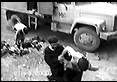
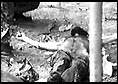
Video documenting the "amnesty" in Chechnya
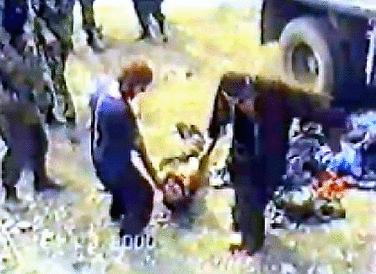
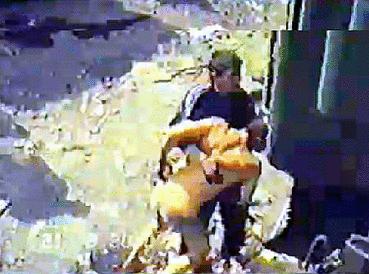
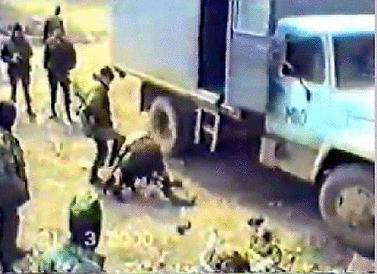
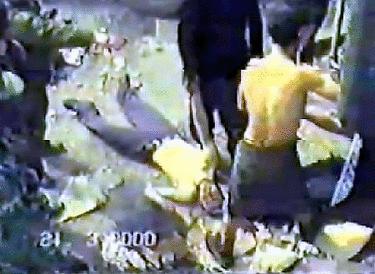
[Short comment by M.L.] Some 6 weeks ago in Novaya Gazeta Anna Politkovskaya wrote an article about tortures in Chechnya. This article had some video stills -, since then in regards to this video-movie (which btw recolls those movies taken by Nazis officers from concentration camps or place of executions) nothing happened. Of course now Abu Ghraib prison scandal broke out, pictures have been splashed all over the world, the US congress inquiry on it, etc. But on the Russian movie we have dead silence. The the link is to that video movie taken by some Russian officer that was first acquired by Novaya Gazeta, now the Polish biggest newspaper Gazeta Wyborcza writes about it. It's crudely made, 28 min long, some 30MB. People with hi-speed internet should be able to watch it easily. A Polish journalist talks to
Anna P. about this video-movie.
Conversed Marcin Wojciechowski
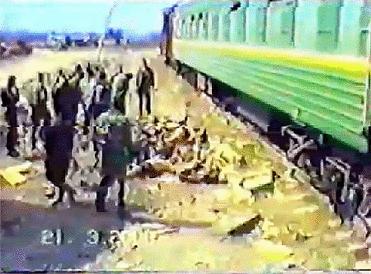
26-05-2004, last update 26-05-2004 19:13 Marcin Wojciechowski: Where this video-movie, which shows the guards unloading Chechens from trucks and loading them to those prison railroad cars has been taken? Anna Politkovskaya: That was on a railroad side-track near the Chervlyonnya station in the northern Chechnya. People who could be seen in this video are the fighters captured after the battle for Komsomolskoye on the turn of February-March 2000. That was the biggest battle of this war in Chechnya besides the siege of Grozny . Then some 1,500 people were defending themselves in that native village of commander Ruslan Gelayev. The army used airplanes and heavy artillery. A part of fighters broke through the encirclement, a part was taken prisoner. The were promised amnesty, to encourage the other guerillas to surrender.
Have people seen on this vido clips been already amnestied?
That's what a man from whom I've got this video-cassette asserts. But, from a group of more than 70 people we were able to find out that only three have survived the captivity. Two of them hanged themselves later and one has disappeared. It's totally unknown what has happened with the rest. Possibly they were moved in the railroad cars to the next filtration camps. A majority could got into the camp in Chernokozovo. I've reached some statements of other prisoners who assert that under cover of the night they were told to move the bodies of prisoners from Komsomolskoye. Some corpses supposedly were still warm, that means that the prisoners were getting killed on the spot. On their bodies there were marks of sapper shovels and other blunt objects. Who is the man who had taken this video?
- That's a young soldier, who was on the contract in Chechnya. He was serving in a special unit of the Ministry of Justice. He has taken this video for a keepsake. Maybe he wanted to boast to his collegues about fighting in Chechnya. I also have some info that this is not the only one this type of case - although I haven't seen other videos. After his return from the war he suffers from this "Chechen syndrom" - which affects many of our soldiers. He had a bad nervous breakdown, he drank alcohol, took drugs and at the end he'd decided to reveal this video to partially hush the voice of his conscience. In every truck there's close to 40 persons sitting, squeezed like in the can of sardines. At some moment we can see some corpses being thrown out. Why corpses?
- The man who was shooting this video says that all people who were loaded on the trucks were alive, which means they died while en route. The reason for that could had been a squeeze, lack of air, tortures which the prisoners were subjected to, lack of medical aid. Does the army still apply tortures in Chechnya? - According to persons who get in touch with me - yes, it does. Generally in every unit there are places for holding and interrogating prisoners. Sometimes that's a whole in the ground covered by a tent fabric - so nothing can be seen. Sometimes it's a cave in the mountains, a clearing in the forest. A big prison is also in the Khankala Russian base, in Grozny, but there's absolutely no access to it. It's own jails has also a pro-Moscow Chechen police commanded by Ramzan Kadyrov who tortures detained as well. Allegedly, his house in Tsentaroi it's big torture room? - Interrogations take place in basements and courtyards. I heard stories of cutting off pieces of skin from people's backs. Young Kadyrov likes to stage a trial in his courtyard. He sits on a platform and pretends to be a judge. People are being beaten up till they acknowleged their guilt or to agree to collaborate. Malik Saydullayev - who was one of the candidates for president of Chechnya had a personal body guard - and he was let go only when he agreed to plant a bomb underneath of his chief's car. Weren't they afraid that after leaving that jail, outside, he will tell about this? - His own and his family's life was warranty of silence. This man was able to leave Chechnay with his wife and children. After that, he told me everything about it. Acquaintance of mine, from a humanitarian organization at the Caucasus, was telling me that the army more often kills than bothers with holding prisoners.
- That depends what's needed at the moment. If there's a bombing attack, and a guilty one must be found very fast, then some prisoner gets tortured till he acknowledges his guilt. There was a case where two brothers were arrested - and one of them was mentally ill. The healthy one was ransomed out by his familly and the sick one admitted himself that he wanted to plant a bomb. Was there even one case that the prosecutorship investigated described by you some cases of torture? - In Chechnya there's a civil and military prosecutorship. The first one tries to do something, but all the cases regarding soldiers are handed over to the military prosecutors. Civil prosecutors even showed to me some documents that they sent this particular case to the military, but after two months everything returns to them untouched. Also, after our publication of this video-movie from Chervlyonnaya - there was no response from the authorities. The Russian journalists also haven't got interested in this. But in your texts some militarymen appear, those who don't like violence, tortures, lawlessness. Sometimes they even deliver some information for you.
- Some of them give me informations for money. But there are idealists too, even among generals. Those who understand that this war destroys Russia and people who participate in it.
(tr. by M.L.)
-----------------------------------------------------------
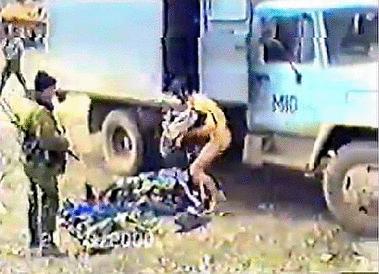
Federal forces first betrayed, then tortured and murdered separatist guerrillas in the Urus-Martan district southwest of Grozny after the guerrillas surrendered some four years ago in response to an offer of amnesty. That is the conclusion drawn by Anna Politkovskaya of Novaya gazeta from what she described in an April 12 article as a "sensational videotape" recently obtained by her newspaper. The video, stills from which can be seen on the newspaper's website, shows Chechen prisoners being transferred at gunpoint from freight carriers. On the side of the freight carriers is the Russian abbreviation for "Ministry of Justice." According to Politkovskaya's accompanying article, she and her colleagues believe the prisoners to be those who accepted a federal offer of amnesty in the year 2000, ending the siege of the village of Komsomolskoye. That conclusion, she wrote, is based not only on the account of the junior officer of a Ministry of Justice commando unit who gave Novaya gazeta the video, but also on her newspaper's own research among relatives of the guerrillas who surrendered at that time. Three families said that they recognized their own men among those shown on the video. In March of 2000 federal officials announced that some seventy-two rebel guerrillas had surrendered at Komsomolskoye and that all were being amnestied. The families of the three seen on the video told Novaya gazeta that they had heard at the time that these three had accepted the offer of amnesty--but that the three never did in fact return to their homes. Quite possibly the video shows them only shortly before they were killed.
It is known, wrote Politkovskaya, that all the captives from Komsomolskoye were sent to a prison at Chernokozovo. Other Chechen prisoners, who were held there at the same time but later released, have said that they were forced to load onto freight carriers the bodies of dead guerrillas from Komsomolskoye. The dead evidently had been killed quite recently, at Chernokozovo itself, because rigor mortis had not yet set in. Their bodies showed signs of torture. "This video recalls only one image: movies about Nazi concentration camps," wrote Politkovskaya. She noted that the captive guerrillas included two women, who unlike the men did not show signs of beating and who were being led off somewhere. The video shows seventy-four men and adolescent boys being herded onto two freight carriers; Russian voices are heard off-stage saying that "they said 72, but there are 74." Most of the male prisoners seen in the video are able to walk under their own power, but some have to be carried by their comrades. Almost all are wounded, some have missing limbs. Many are emaciated, and many are barefoot or even fully naked. Some seem utterly disoriented, unable to understand commands. No doctors or nurses are visible among the Russian soldiers guarding the prisoners. As ordered by these guards, the prisoners unload comrades who have died while being transported, forming a mountain of corpses next to the railroad tracks. There is not the slightest sign of the guards trying to distinguish between those who have been given guarantees of amnesty and other prisoners. According to Politkovskaya, the Russian officer who made this video at first enjoyed showing it to his friends and family after his return from Chechnya. "But time passed, and he came to a sober, horrified realization of what he himself had done." Making the video public was his own idea; he hopes it will help free him from "a nightmare which continues to torture him right up to the present."
Russia: Lack of reaction on video with scenes of abuse of Chechen prisoners of war IAR 27-05-2004, last update 27-05-2004 12:40
The Russian human right defenders think that the prosecutorship should persecute persons responsible for maltreatment of Chechen prisoners, that's a reaction on that video on which can be seen how Russians treat Chechens who were captured as prisoners or war. The Russian courts and prosecutorship haven't got interested in publications of Novaya Gazeta, from which it can be assumed that Russian soldiers were abusing Chechen prisoners of war. This video that testifies about it has got Anna Politkovskaya - journalist of Novaya Gazeta. It's been taken in 2000.Human rights defender Lev Ponomarev said to the Polish Radio that the prosecutorship ahould reaact on this type of information itself. Also Anna Politkovskaya asserts that her role in not in writing statements to the prosecutorship. Although, from the publication of shocking photos in Novaya Gazeta more than a month has passed nor the law enforcing organs nor the Russian media got interested in. Sergei Kovalev thinks that because subordination of Russian court system the authorities are not intersted in investigating of uncomfortable for themselves facts. In Russia we have shocking court verdicts. Just lately, court has acquitted spetsnaz soldiers, who with cold blood killed six Chechen civilians. Besides a small circle of human rights defenders nobody has reacted to that verdict.
by maw 26-05-2004, last update 26-05-2004 18:40
Remarks of Sergei Kovalev - former human rights commissioner
Our prosecutorship is not independent, but totally subordinated to the executive authorities, therefore it is not interested in investigating crimes committed by the representives of this authorities. The prosecutorship is interested in investigating of breaking human rights in Chechnya only if this is done by the other side.
Till today there has been no inquiry on massacres of civilians committed during entering of the Russian army to Grozny in January and February 2000, although at least deaths of 57 eople have been documented. According to the law, prosecutors have a obligation to begin investigation on the base of publication in a newspaper if this deals with grave crimes. But it's easier to ignore this. Putin said in his speech yesterday, that is not allowed to fight against terrorists breaking human rights. And what he supposed to say? That to fight with terrorists we used terrorist methods, and that Chechnya that's a territory out of law? Many people in the West believe in Putin words. This reminds me this adage: " You don't have deceive me, I eagerly will deceive myself".
|